There is something slightly ironic happening in wedding filmmaking at the moment. After years of increasingly better cameras, sharper lenses, higher resolutions, smoother stabilisation and almost obsessive attempts to make everything look perfect, we are suddenly putting the imperfections back in. Grain, motion blur, handheld cameras, crash zooms, oversaturated colour, black and white, static wide shots and footage that looks as if it could have been filmed on an old Super 8 camera are appearing in modern wedding films. At the same time, we are filming with cameras capable of extraordinary image quality, using stabilised lenses, drones, gimbals, professional audio equipment and all the technology we have spent the last twenty years acquiring. We have never had better tools for creating technically perfect images, yet some of the latest wedding film trends involve deliberately making those images look less perfect.
Weddings, of course, have always had a slightly vintage feel. Old cars, historic churches and houses, dresses, hairstyles, bow ties and traditions that have been passed through generations all sit quite comfortably alongside modern wedding styling, so using a little black and white footage in a wedding film never really seemed out of place. Recently though, that nostalgia has grown wings, with heavier grain, motion blur, softer images, stronger colour and the increasingly popular 1970s Super 8 look finding their way into contemporary wedding films. Even the quick crash zooms and slightly erratic handheld movement that filmmakers spent years trying to eliminate have somehow become fashionable again.
When imperfection becomes part of the story
I have spent years using sliders and gimbals to add controlled cinematic movement to my wedding films, and I still believe that movement adds emotion as well as motion. A slow movement towards something can bring a detail literally into focus, directing the viewer towards the part of the frame that matters, while a carefully controlled reveal can completely change the feeling of a shot. I certainly don’t think the move towards more natural or imperfect wedding films means that those cinematic techniques have suddenly become redundant.
At the same time, I began noticing how often good films and television programmes simply leave the camera alone. The filmmaker creates an interesting composition, perhaps using leading lines, symmetry or the rule of thirds, and allows the actors to move around within the frame rather than moving the camera around them. There is a subtle difference in how that feels: the protagonist becomes the driving force of the movement and the focus of our attention, rather than the camera itself. After years of instinctively adding cinematic movement, it has actually been a difficult habit for me to break, so increasingly I will capture both versions at a wedding, giving myself the choice later when I sit down to edit.
This is one of the interesting things about current wedding videography trends, because there isn’t really one dominant style replacing another. Static shots are appearing alongside shaky handheld camcorder-style footage; silent, grainy Super 8 sequences are appearing alongside beautifully recorded natural audio; vertical films designed specifically for Instagram sit alongside traditional widescreen cinematic wedding films. They contradict each other, but they can all lend a different personality or vibe to a film, and knowing when to use each one is becoming another part of the craft.
Instagram, content creators and a different relationship with the camera
The growth of wedding content creators has undoubtedly influenced this change. A phone is small, familiar and immediate, and people behave differently around one. Brides, grooms and wedding parties are increasingly comfortable looking directly into the camera, performing little actions or dances, creating transitions and generally acknowledging that somebody is filming them. For years professional wedding filmmakers became increasingly good at doing almost the opposite, trying to disappear into the background and capture natural moments without affecting them, so it is interesting to see those two approaches beginning to overlap.
Social media has changed the finished product too. Instagram Reels are short, vertical and need to attract attention almost immediately, while captions and snippets of natural recorded audio have become completely normal because so much online video is watched on phones, sometimes without sound. That has fed back into wedding filmmaking, where capturing a casual remark from the bride or groom, somebody laughing close to a microphone or a little piece of conversation can suddenly give a short film much more personality than music alone.
There is a practical difference between wedding content creation and professional wedding filmmaking though. Content creators can be selective about what they capture and concentrate on getting short pieces of content online quickly, while interest in the wedding is still at its peak, which social media algorithms obviously love. As wedding filmmakers, we have a much larger amount of material to capture, often horizontally and on several cameras at once, including the ceremony, speeches and all the footage required to create the main wedding film. That inevitably makes it harder to compete with the immediacy of content creation, although personally I love the opportunity that these very short Instagram films give us. The short duration allows enormous creativity, while footage captured on professional cameras still has that polished cinematic quality that can make a fifteen or thirty-second film look very different from something captured on a phone.
The return of the crash zoom
The crash zoom is probably one of my favourite examples of an old technique suddenly finding a new purpose. In the 1970s and 80s a quick zoom during a shot was perfectly normal, but as professional wedding filmmaking moved towards prime lenses, shallow depth of field and more controlled cinematic imagery, visible zooms began to look dated. We learned to avoid them, and if one happened accidentally it would normally disappear in the edit.
Now suddenly the crash zoom is back in fashion, and apart from adding a little energy and personality, it is actually quite useful. A quick zoom can bring the audience with us towards something happening within the frame, direct attention towards a person or detail, add movement without physically moving the camera, or simply allow us to reframe and recompose the shot. The same is true of whip-pans, another technique that immediately reminds me of television programmes from the 1960s and 70s, where the camera suddenly whips sideways from one scene into another. They can create a lovely transition in a modern wedding film, but they also require some planning at the filming stage, remembering to add that whipping movement at the beginning or end of a clip so that the editor actually has something to work with later.
That is probably where these trends become most interesting to me. They aren’t just filters or effects added afterwards to make something look fashionable; they give us new ways to film and tell the story, even if some of those “new” ideas are actually techniques filmmakers were using fifty years ago.
Why does imperfect footage sometimes feel more real?
This is perhaps the strangest part for somebody who has spent nearly twenty years trying to make everything steadier, cleaner and more cinematic. Occasionally I will now take a perfectly stable piece of footage and deliberately add handheld movement to it in the edit.
There is a reason for it. These imperfections affect how we engage with what we are watching. If the camera moves and shakes while following somebody running, we feel as though we are running with them; if somebody suddenly looks into the lens and laughs, we become aware of the person behind the camera and almost feel as though we are standing there too. Grain can add atmosphere where an extremely sharp digital image sometimes provides almost too much clarity, while motion blur and imperfect framing can give a moment an immediacy that a perfectly composed shot doesn’t always have.
None of this means that technically beautiful footage has somehow become less valuable. Quite the opposite. The main feature film still needs those cinematic shots, controlled movement, good composition, clean sound and properly captured moments, but the newer techniques give us another set of tools to change the pace or feeling of a sequence. Sometimes we want to draw the viewer deeply into a scene, sometimes we want to add energy or humour, and occasionally we actually want to take them out of it for a moment before bringing them back in. The combination is what makes the finished film interesting.
Super 8, nostalgia and making modern footage look old
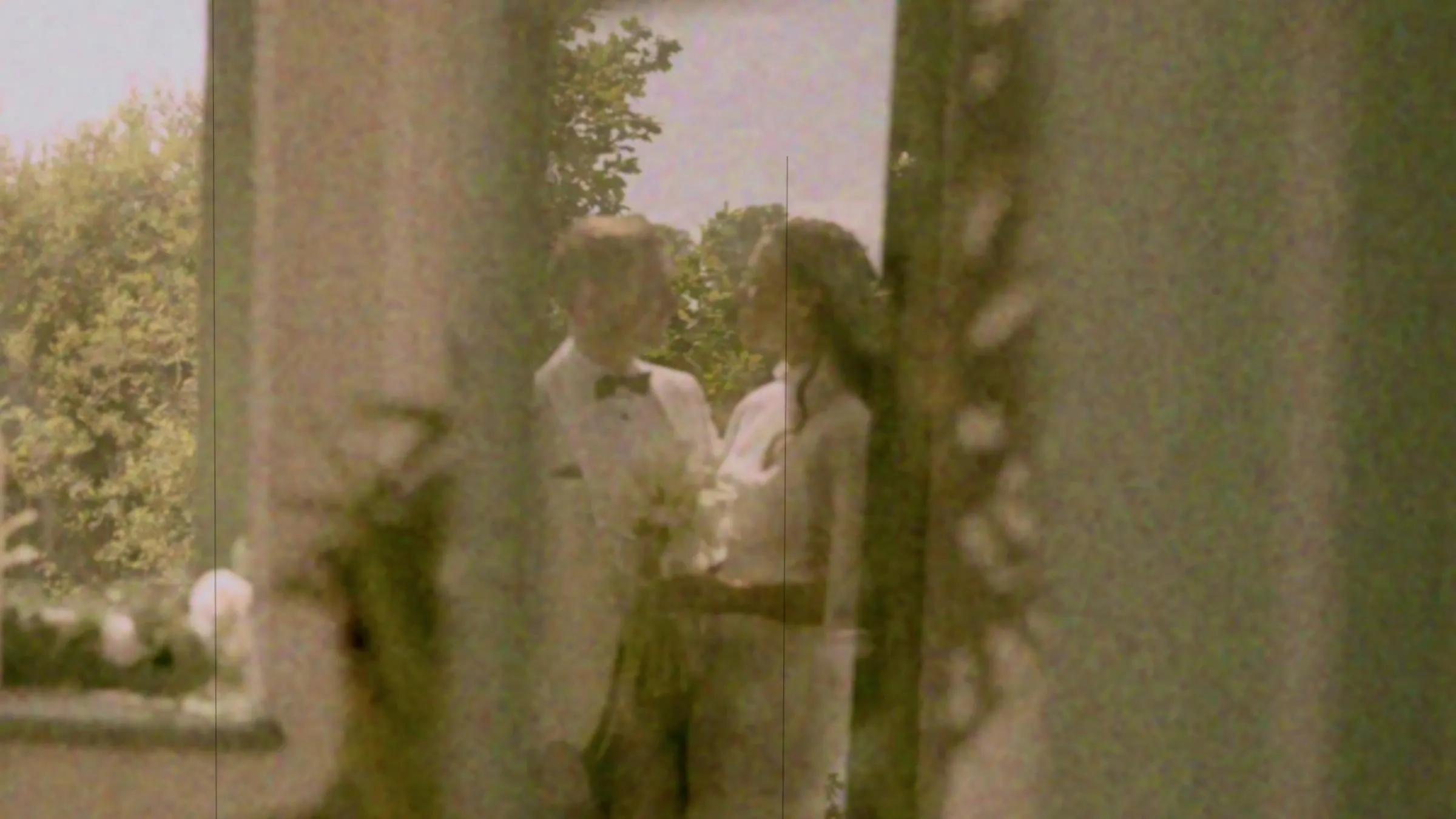
The current fascination with Super 8 wedding films probably brings all of these ideas together. Real Super 8 has grain, colour shifts, limited resolution, inconsistent exposure and the characteristic movement of film running through a mechanical camera. Traditionally it was also silent, with Super 8 home movies becoming part of the visual memory of family life throughout the 1960s and 70s. Those characteristics that would once have been regarded as technical limitations are now precisely what gives the footage its appeal.
There is something about that highly saturated, grainy footage that immediately feels nostalgic, even when we know perfectly well that the wedding happened in 2026. Perhaps we have simply learned to associate the look of old film with memories, family and the past, which makes it particularly appropriate for a wedding. The irony, again, is that we can now capture an incredibly clean digital image on a modern professional camera and deliberately introduce many of the limitations that engineers spent decades trying to remove.
For me there is an important advantage to doing it that way: the original still exists.
A wedding film has to survive the trend
Trends are trends, and what looks contemporary today may look very different in twenty years. That creates a responsibility for wedding filmmakers that is slightly different from somebody creating content primarily for Instagram. We need the film to feel relevant and contemporary now, but we also have to consider the possibility that the couple will sit down with their children in twenty or thirty years and watch it on whatever enormous television screens we have by then.
This is where I struggle slightly with vertical filming. I understand completely why it exists and I have tripod plates on both the bottom and sides of my cameras so that I can quickly move between horizontal and vertical compositions, but as a cinematic filmmaker it still feels restrictive to throw away all that wider scene simply to fill the screen of a phone. Vertical footage is incredibly useful for Instagram today, but I wouldn’t want an important moment preserved only in that format for the future.
I feel much the same about an entire wedding filmed as grainy, silent 8mm footage. Used in the right places it can be beautiful and add enormous personality, but if a couple watches their wedding film in 2046 and the 2020s obsession with making digital footage look forty years older has long disappeared, I don’t want them wondering why the only footage of an important moment looks so bad.
The middle ground is to capture both, or to capture the moment at the best quality possible and create the alternative version afterwards. Get the widescreen shot and, when possible, capture a vertical one too. Film the beautifully controlled movement and then try the static composition. Record clean natural audio even if a particular sequence ultimately uses only music. Capture the moment properly first, because at a wedding there is rarely a second opportunity, and once that has been achieved we have the freedom to experiment.
Finding the balance between contemporary and timeless
Ultimately, I don’t think wedding films are actually starting to look like the 1970s; we are borrowing some of the best bits. Grain, Super 8 colour, crash zooms, whip-pans and handheld movement are being mixed with drones, gimbals, professional audio, modern lenses and cameras capable of image quality that filmmakers fifty years ago could hardly have imagined. At the same time, Instagram and wedding content creators have encouraged more interaction with the camera, more immediacy and a willingness to make short films that don’t necessarily have to follow all the traditional rules.
For the wedding filmmaker it ultimately means more work, because having more options means capturing more options. Sometimes that means taking a shot twice, sometimes it means changing the camera orientation, and sometimes it simply means recognising an opportunity quickly enough to try something creative while still making sure the important moment isn’t missed.
Our primary job is to capture those moments properly. The vows, speeches, reactions, glances, laughter and all the little things happening around the edges of a wedding day only happen once, and no amount of fashionable editing can replace something that wasn’t filmed in the first place. Once we have those basics right, however, we can use our experience and creativity to decide whether a moment needs a beautifully controlled cinematic movement, a completely static camera, a sudden crash zoom, a little grain or even a touch of the 1970s.
Some of those trends will disappear again, as trends always do, and new ones will take their place. The challenge is to make a wedding film that feels contemporary and exciting now, without allowing the fashion of the moment to overwhelm the reason we were there with a camera in the first place: to preserve something that has to last considerably longer than an Instagram Reel.