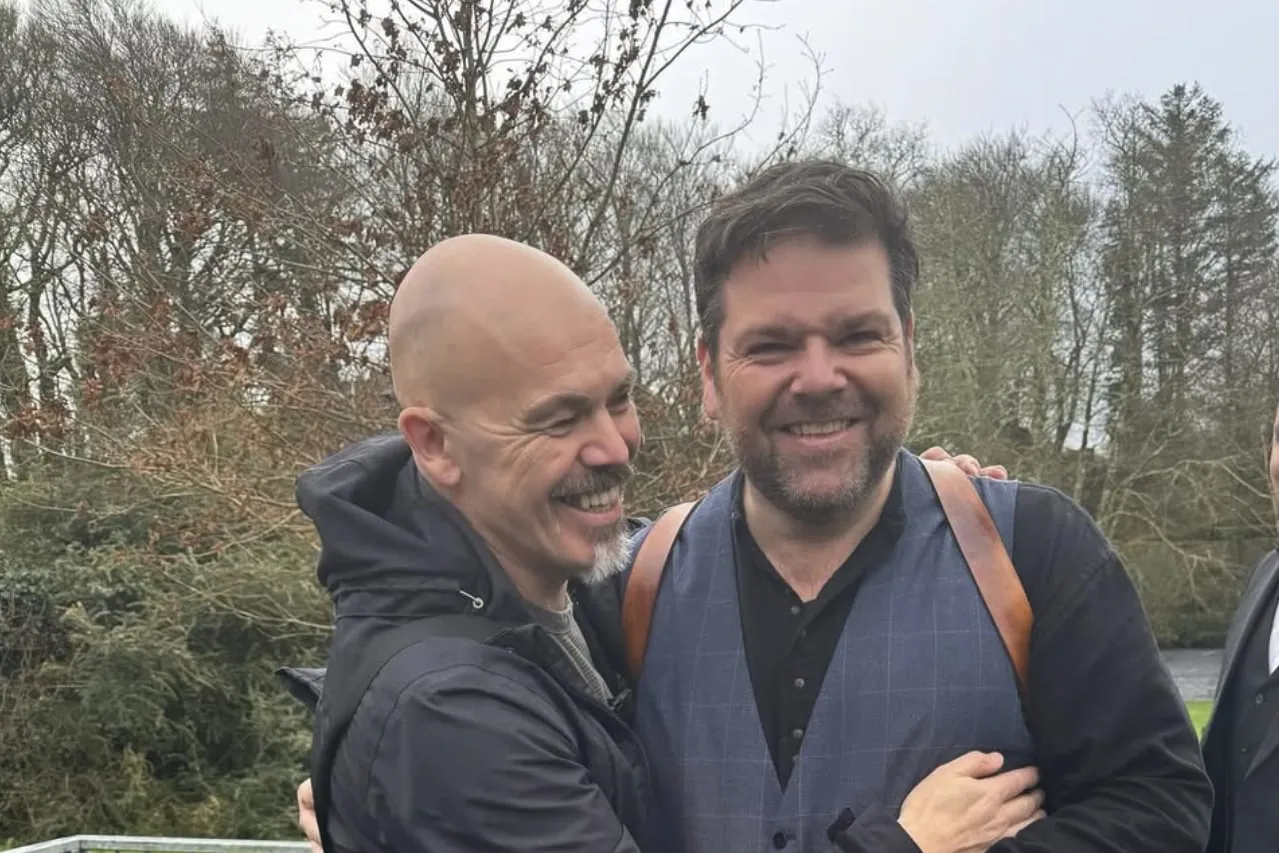
There are wedding mornings when I walk into a house or hotel room carrying my cameras, spot the photographer across the room and, before I’ve even properly said hello to everyone, I’m greeted with a bear hug. I’ve been filming weddings since 2007, the year after I met my wife Monica and many years before the arrival of our children, and some of the photographers I still work with today have been working alongside me, year in and year out, for much of that time. They knew me before I had children, we’ve watched each other’s families and businesses grow, and after hundreds of weddings together there is an ease and familiarity that makes the day go that little bit quicker and smoother.
We always have something to talk about. Sometimes it’s family and life, sometimes cameras, lenses or some new piece of equipment one of us probably didn’t need to buy. We talk about other weddings, venues, other suppliers, marketing and branding, IT and clerical work, the latest trends and technology, balancing family life with endless editing, and all the other things that come with being self-employed and running a creative business. The list of conversations is fairly endless, because in many ways we have a lot in common. We’re entrepreneurs, creatives and small business owners dealing with many of the same problems, and I think that’s one of the reasons some of those friendships have prevailed for so long.
Of course, I don’t only collaborate with photographers who are friends. A wedding is a team effort and I’ve always approached it that way, whether I’ve worked with somebody fifty times or I’m meeting them for the first time. I’ll chat with the make-up artist, the hairdresser, the car drivers and everyone else involved in making the day happen, but the person I inevitably work most closely with is the photographer. Wedding photography and filmmaking overlap enormously and, for most of the day, we’re trying to capture the same people, in the same places, at exactly the same time. When it works properly the two work almost in unison as a team. When it doesn’t, unfortunately, both the day and the work can suffer.
A rather delicate dance
After working with somebody for years, you begin to develop an almost non-verbal understanding of how the other person works. You know their rhythms and movements, where they’re likely to stand, when they’re about to change position, when they’ve got what they need and when it’s your opportunity to step in. They know the same about you. I know where I need to stand to get my shots without ruining theirs, and they know that occasionally I need to interject because there is something I specifically need for the film.
The best couple shoots can almost become a kind of tag team. The photographer starts an idea, I elaborate on it, they make a change, I make a change, they move composition and I move composition. We’re looking for foliage and trees to shoot through in the foreground, interesting light, framing ideas, doors, colours and movement. Experience gives all of us a few simple ‘go to’ ideas as well; a windy day suddenly offers opportunities with a veil, while at venues we’ve worked at many times we already know where the light will be, where best to position the couple and where we need to position ourselves.
Sometimes one of us will spot something the other hasn’t. Sometimes I’ll have an idea and direct the couple for a while, and many of the photographers I regularly work with respect my creativity and eye for detail enough that they’re perfectly happy for me to do that. Likewise, I’ll happily work from an idea they’ve created and find a way of turning it into something that works for film. Nobody needs to own every idea.
That collaboration starts long before the couple shoot too. I’ll often help arrange the details or set up a flat-lay in the morning and, if I arrive first, I may have everything laid out and ready before the photographer gets there. Apart from giving me an opportunity to get the shots I need, it makes their day a little easier too. I’ve always thought there should be a bit of give and take; if we’re both going to need space, time and cooperation from one another throughout the day, it makes sense to give as much as you take.
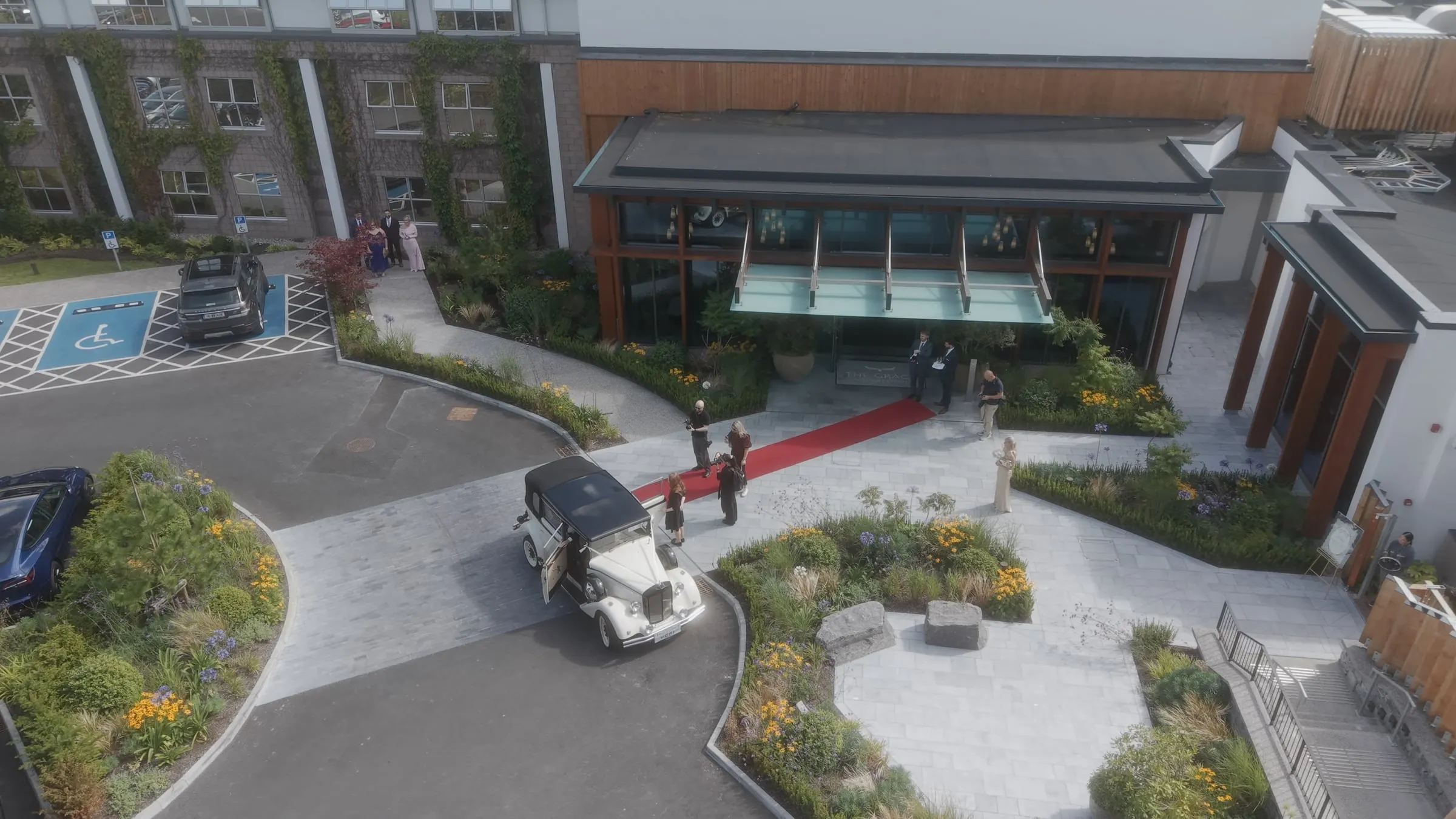
The same applies to little things that have nothing to do with who was booked to do what. If somebody needs a hand carrying equipment, I’ll help. If I find a good location or notice particularly interesting light, I’ll share it. I usually take extra photographs while the drone is in the air and send them directly to the photographer afterwards for them to use, and occasionally I’ve taken a photograph simply because I’ve spotted something happening while the photographer was somewhere else, then sent that on too. None of this is particularly complicated; it’s just being part of a team.
Photography and film don’t always need the same thing
There are, however, subtle differences between what makes a great photograph and what makes a great piece of film, and this is where experience and communication between a wedding photographer and filmmaker really matter.
These days I often mic the couple during their shoot because I’m interested in capturing the spontaneous little bits of audio that happen between them. If they’re walking together and we shout, “look at each other and have a chat!”, I’m not only recording the lovely images, I can actually hear their interaction as well. Sometimes what they say is funny, sometimes affectionate and sometimes completely ridiculous, but it’s theirs, and those unscripted moments can add something very personal to a film.
The difficulty is that the subtle interaction I’m waiting for can easily be spoiled if somebody is constantly giving them new directions. There are times when I need the photographer to stay quiet for just a little longer and allow the moment to develop on its own. Equally, there are times when the photographer needs something very specific and it’s my turn to stand back.
The same thing happens with composition. I increasingly like shots where the camera remains motionless on a monopod and the action develops within a static frame, but obviously that doesn’t work particularly well if the photographer is repeatedly walking through it. That doesn’t mean they’re doing anything wrong; they need to move to create their photographs. It simply means we sometimes want different things at the same time.
Ultimately, it’s about understanding that we’re both there to get the best for the couple and for our own work, and that usually there is enough time for both of us to get everything we need. It’s a delicate dance sometimes, knowing when to move, when to speak up, when to stand back, and when the shot just isn’t right for you but your opportunity will come in a moment, so you may as well start thinking up another idea.
When the dance doesn’t quite work
Thankfully it’s rare, but over the years I’ve experienced most of the ways the photographer and filmmaker relationship can go wrong: people competing for position during the ceremony, walking into one another’s shots, monopolising the couple shoot, directing without considering what the other person needs, moving details before they’ve been captured, standing in aisles or simply treating the other supplier as an inconvenience rather than somebody trying to do an equally important job.
I’m an outgoing person and I will speak up for myself when I need to, and occasionally that can ruffle feathers if somebody won’t budge or sees video as somehow subordinate to photography. Most of the time, though, I find you can win people around. Keep talking, be friendly, offer to help even if they haven’t been particularly helpful to you, share an idea or carry something when their hands are full. It is difficult to remain territorial with somebody who is very obviously trying to make your day easier.
I also think there’s much more to being good at this job than simply being good at taking pictures. A large part of working in the wedding industry is how you are with people; being calm and reassuring with the couple and their families, getting along with the other vendors, being friendly and occasionally funny, and keeping the mood light and upbeat when things aren’t quite going according to plan. We are there to document the wedding rather than become the wedding, but because we’re trying to capture everything we inevitably interact with the couple, their guests and each other, and because of that we need to show our best side, keep things happy and look for solutions rather than problems.
The photographers who do that particularly well tend to be the people I’ve become friends with over the years. We work well together because, apart from knowing one another’s working habits, we generally have similar values and personalities. Neither of us is trying to win the wedding. We both want what’s best for the couple and understand that the photographs and film are important, but the experience of the day matters too.
Better together
Perhaps the nicest thing about really good collaboration between a wedding photographer and filmmaker is that the couple probably won’t notice most of it. They won’t know that I held back while the photographer finished a shot, that they stayed out of my frame for twenty seconds while I recorded a conversation, that one of us spotted the light and the other found the composition, or that an idea which appears in both their photographs and their wedding film started with one person and was gradually developed by both.
They’ll hopefully just remember that we had a bit of fun, that the shoot felt relaxed and didn’t take forever, and that the two people following them around with cameras seemed to get along remarkably well.
Of course, this harmonious “dance” of working together has been honed over many years and we both know our expertise and what we need to do. This is where the introduction of a content creator, who is also taking photos or video clips, and who also needs time with the couple, and who also needs to have the experience and knowledge to know where to stand and stay out of each other’s shots, can make a huge difference… not always a positive one.
But that’s an essay for another day.